
FOETUS IN FOETU
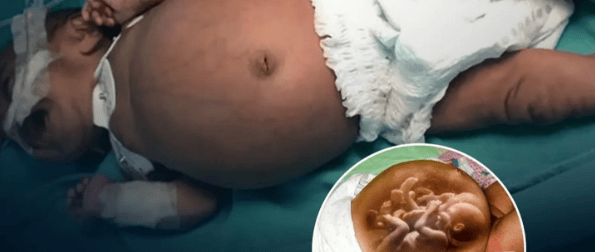
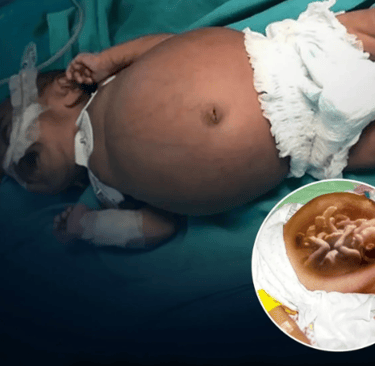
Foetus in Foetu, also called cryptodidymus, is a rare congenital disorder or developmental abnormality where a malformed fetus or a mass of tissue resembling a fetus is found within its twin, often mistaken for a tumor.
Ms. Priya Choudhary
7/12/20252 min read
FOETUS IN FOETU
Foetus in Foetu, also called cryptodidymus, is a rare congenital disorder or developmental abnormality where a malformed fetus or a mass of tissue resembling a fetus is found within its twin, often mistaken for a tumor. It occurs during abnormal embryogenesis in a monochorionic diamniotic twin pregnancy
About Foetus in Foetu
Basically, one twin is very underdeveloped and enwrapped inside the body of the other twin, so much so that the pregnancy is considered a singleton pregnancy. The presence of a twin inside the body of the other twin may go undetected for years. This condition occurs when a malformed foetus develops inside another foetus. It affects about one in 500,000 births. Less than 200 cases have been reported worldwide, with about 10 to 15 cases in India.
Clinical presentation
Most patients present with an abdominal mass in the first year of life. There also may be symptoms of mass effect, such as difficulty in feeding.
Causes of Foetus in Foetu
The exact cause of this condition is not fully understood, but it’s believed to result from an anomaly during the development of monozygotic or identical twins. About 10 to 15 days after the conception of monozygotic twins, the cell mass of the embryo may be split unevenly, due to which one twin is smaller and incompletely formed with the other twin fully developed. The smaller twin gets trapped within the larger twin. The trapped twin is considered “parasitic,” as it draws its blood supply and nutrients from the other “host” twin.
The trapped or “parasitic twin” has some morphologic features of a normal foetus such as an umbilical cord-like structure, a bag of membranes surrounding it, and blood vessel connections to the host twin. It may have a vertebral column, limbs, and a few organs but lacks vital organs like the brain, heart or gut. Despite having “living tissue,” the parasitic twin has no prospects of independent existence outside the host twin.
The presence of the parasitic twin affects the health of the host twin, who has to “feed” the former from the nutrients received over a single umbilical cord. In addition, enlargement of the trapped parasitic twin may compress vital organs in the host and cause discomfort or life-threatening complications. Generally, the parasitic twin is found in the abdomen of the host twin. Rarely, it may be found in other organs like the brain or chest.
Location
Most occur in the abdomen, with 80% in the retroperitoneal cavity. Other rarer reported locations include:
Cranial cavity
Mediastinum
Scrotum
Pelvis
Radiographic features
Plain radiograph and CT
May typically show a calcified abdominal mass with some components favoring fetal parts within the abdomen (or rarely other parts) of a neonate. This is best seen on cross-sectional imaging rather than plain radiograph.
Different fetal parts may be appreciated:
Vertebral column (most common ~90%)
Limbs (~80%)
Central nervous system (~55%)
Gastrointestinal tract (~45%)
Vasculature (~40%)
Genitourinary tract (~25%)
Treatment
The recommended treatment for the FIF is surgical removal of the parasitic foetus.